


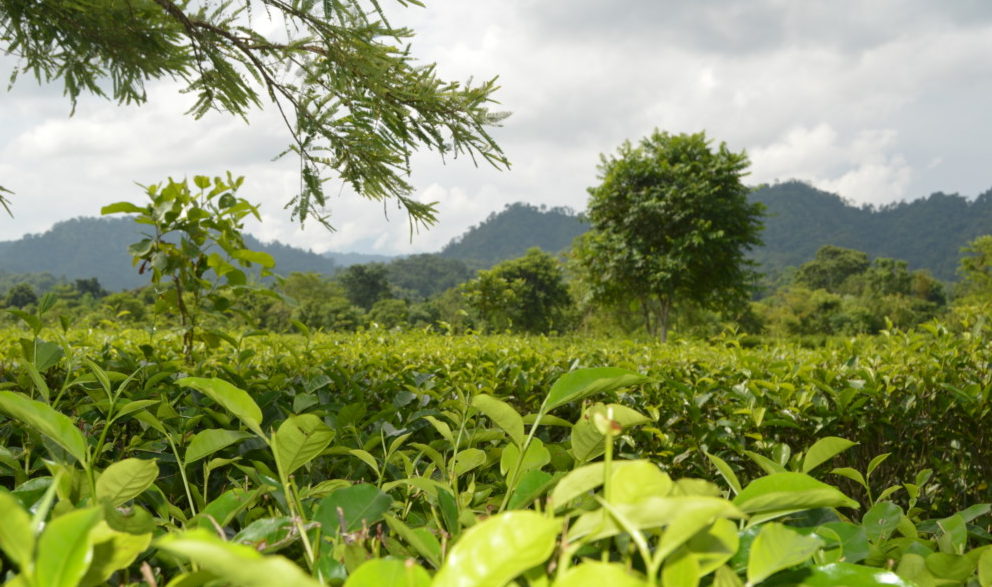
Tea in Bodoland Assam, India-Heather and I traveled to India during monsoon season. Water from the Himalayas blankets the steamy jungles, rice paddies and tea farms. It takes little exertion to sweat–heat and humidity–perfect growing conditions for tea.
Tea and Elephants
Tea, elephants, and Elephant Friendly certification are the reasons we came to India. Lisa Mills introduced us to Elephant Friendly certification. We wanted to learn more about this certification from the Wildlife Friendly Enterprise Network. Lisa is an American ambassador for wild Asian elephants (Elephas Maximus).
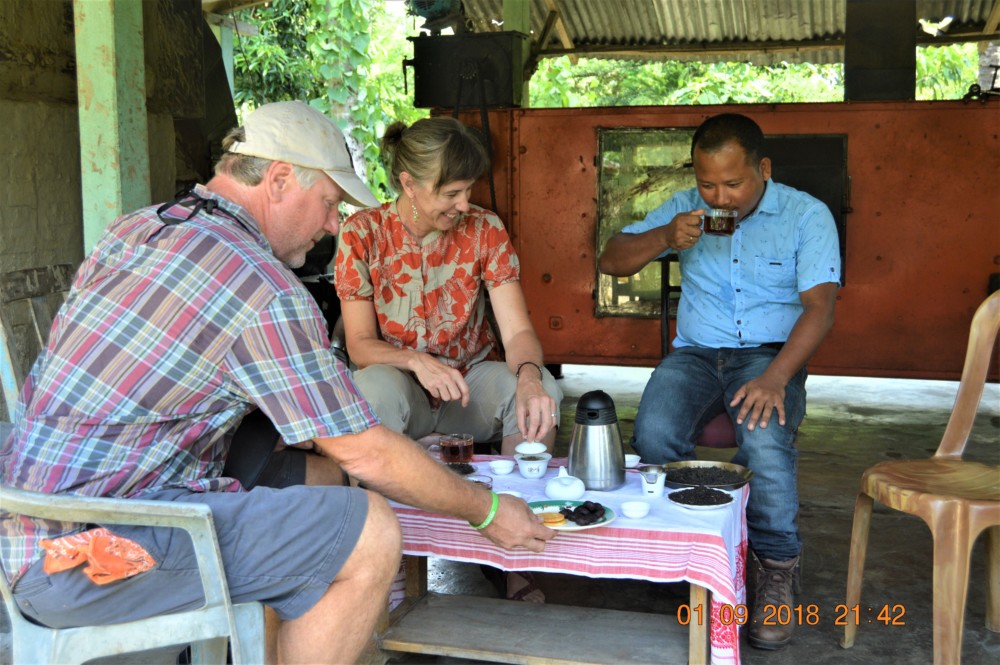
Lisa facilitated our trip and introduced us to Tenzing Bodosa, a small tea farmer from Assam. His commitment to elephant conservation is evident in all he does. He provides forest corridors essential for elephant survival. Additionally, he uses organic practices focused on long-term sustainability and social responsibility. He is a true innovator with a unique history. Bodosa represents a harbinger of positive change in the Indian tea industry.
Organic Farming
Tenzing is Bodo. Bodo are an indigenous tribe living in northern Assam bordering Bhutan. His infectious smile and charisma could fill up a room. The organic tea gardens border Bhutan. He grows native grasses, plants and trees in his nursery using permaculture. He hosts guests and world travelers in his extraordinary tree house in the middle of his tea farm.
The Bodo have waged a campaign for political and social standing since the 1980’s. In this struggle, Tenzing’s father and brother were murdered when he was young, so political representation and socio-economic equality take on special meaning.
Bodosa values elephants and all wildlife-from leopards, wild pigs, tigers, cobras to porcupines coming from the jungle to eat, drink, and live in his tea garden. Situated at the toe of Bhutan, his tea gardens are wild places. He tolerates and welcomes elephants.
Land Reforestation for Elephants
This involves the restoration of elephant grass and rainforest trees that elephants eat. He encourages local people to accept elephants. Elephant habitat is shrinking, and they increase contact with people. One of the big issues for elephants is the physical and verbal harassment they get from workers when they move through the tea estates and from local farmers.
Tea Tree House
Our first day in Assam at the tea farm was exhilarating. We stayed in the tree house for the night. We were at the edge of the jungle, surrounded by tea. Elephants, peacocks, and zili (crickets) could be heard throughout the night.
We witnessed firsthand what elephants endure at the tree house. While cooking by the fire, we suddenly heard pops, and Tenzing said nearby farmers used firecrackers to frighten away the elephants. A little while later, we heard their bellows as they moved on. Their cries were mesmerizing as they reverberated through the jungle, transcending time. Though we didn’t see elephants, we felt their presence.
Through education and the creation of jobs from sustainable forest products and services-bamboo, spices, fruits and nuts, eco-tourism and the myriad of recreational and wildlife-dependent activities-humans can live in the presence of elephants. The species can thrive, even in an increasingly developed society.
Respect Nature
Tenzing believes in the medicinal and recuperative powers of tea, but he will not separate the tea from nature. He is fond of saying, “If you respect nature, nature will respect you.” This Bodo man’s philosophy of ecology intertwines in all that he does.
written by Jake Kreilick


Category: Uncategorized