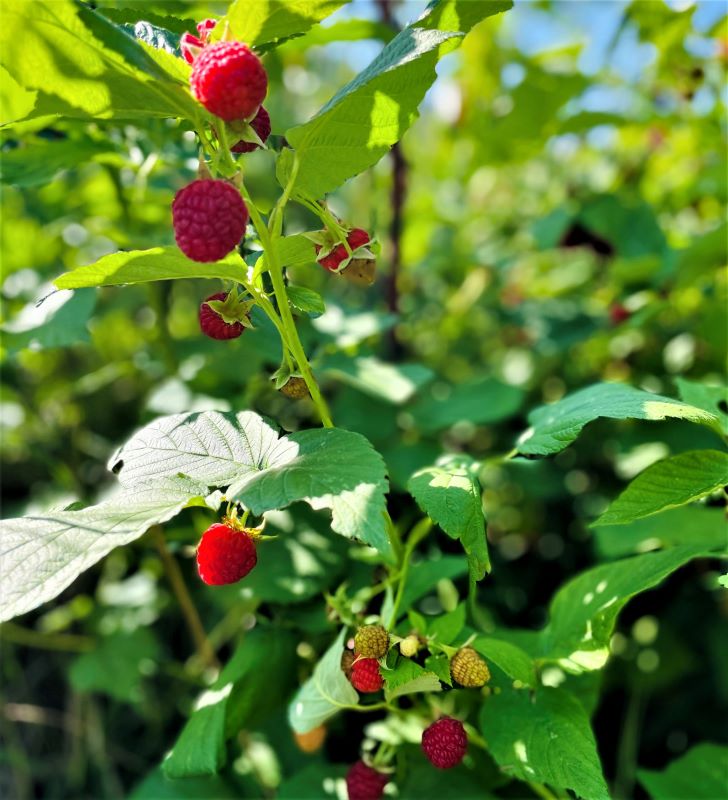
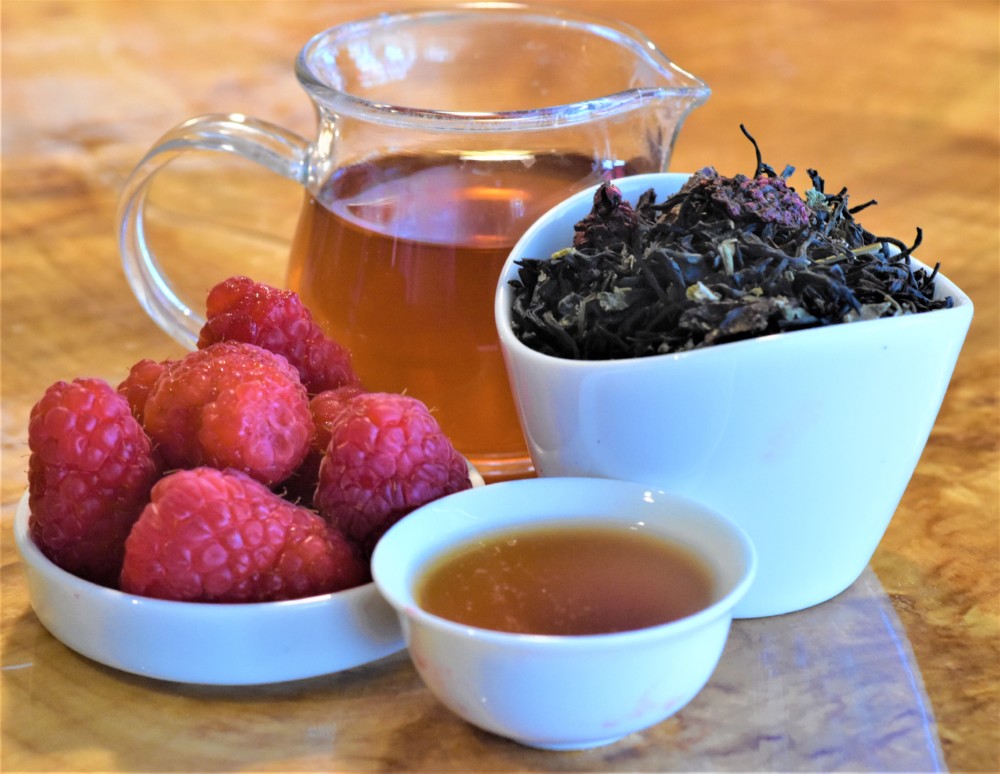
Red raspberry leaf makes delicious tea, and has lived in herbalists’ and midwives’ satchels for thousands of years. People still know it today as a women’s herb: helpful during pregnancy and in easing menstrual bleeding and cramps. However, just about everyone can enjoy the benefits of this friendly bramble. Raspberry leaf tightens and tones tissues, and improves pelvic circulation, strengthening reproductive organs in all people. It soothes and strengthens the digestive tract and gums. Also, it helps counter dysentery, IBS, chronic diarrhea, and leaky gut.
Raspberry leaf also shares a chemical similarity to tea, giving it a similar mouthfeel. Time to brew a cup and learn all about it! Lake Missoula sells raspberry leaf as a single botanical, and also blends it into these recipes:
- Belly Bliss
- Cycle Goddess
- Easy Does it Elderberry
- Raspberry Patch (summer seasonal)
- Skin Glow
- Sun-Kissed Huckleberry
- Wonder Woman
Rose family (Rosacea), Rubus genus (brambles)
Red Raspberry (Rubus) belongs to the Rose family. All members of the Rose family are astringent, meaning they exercise a mild pulling and toning effect on our tissues. Raspberry tea, made from the dried leaves, has several therapeutic actions: astringent (toning), antiemetic (quelling nausea), parturient (improving reproductive health), emmenagogue (stimulating pelvic blood flow), stimulant (enlivening the body), and stomachic (aiding digestion). Red raspberry leaf contains high levels of minerals and trace elements, especially Vitamin C, calcium, and iron. In all bodies it helps to cleanse excess mucus, tone lax muscles, and treat hemorrhoids. Then it also works as a great blood builder because of the ferric (iron) citrate constituent—most effectively when combined with nettle and yellow dock.
Besides filling your favorite mug, the well-strained tea (through a coffee filter) will also work as a gentle eyewash for eyes irritated by contact lenses and mild eye infections. Some people even report improved vision.
Herbalists believe raspberry leaf strengthens the uterus. Every expectant mother should aim to drink a cup of raspberry leaf tea a day, thus reducing the need for medical intervention at birth. Then after 3 months of pregnancy (to avoid any chance of alarming—but not dangerous—break-through bleeding), drink 1-2 cups a day to ensure a swift and easy birth: healthy and timely labor, healthy birthing, and swift recovery.
For a gentler menstrual cycle, sip raspberry tea daily in the weeks leading up to menstruation. The Vitamin B6 in raspberry plays a prominent role in reducing cramps: it binds to estrogen, testosterone, and progesterone in the body, aiding hormone balance.
Safety and Versatility
Raspberry leaf is very safe. Anyone above age 18 can enjoy up to 3 cups per day of the dried leaf tea. People with estrogen hormone-sensitive conditions (such as breast cancer, uterine cancer, ovarian cancer, endometriosis, or uterine fibroids) should avoid consuming too much raspberry leaf, since it can mimic the effects of estrogen in the body.
True tea (Camellia sinensis) shares raspberry leaf’s astringent qualities. Many associate that slight pucker and dry mouthfeel with tea, or wine, or many fruits—especially fruits that haven’t completely ripened. If you enjoy strong black tea, but you want to cut down your caffeine, try swapping raspberry leaf into your beverage rotation.
Finally, if you want to mix your own herbal blend, raspberry combines well with other nutritive herbs such as milky oats, lemon balm, nettles, chamomile, mint, and skullcap. If you don’t like the tannic flavor, then try adding dried orange, lemon, or more mint.
Written by Greta de la Montagne.
Resources
https://www.sciencedirect.com/topics/medicine-and-dentistry/red-raspberry-leaf
Textbook of Modern Herbology, 2nd Revised Ed, Terry Willard Ph.D
Herbal Healing for Women, Rosemary Gladstar
Category: Health Benefits Greta's Herbalist Corner