
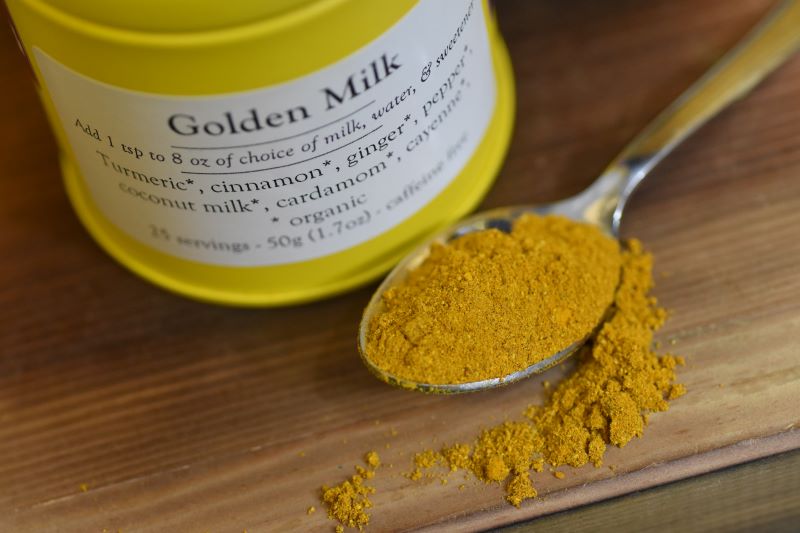

Maybe you’ve seen that bright yellow powder in a crafty cook’s kitchen cabinet, but how much do you know about this eye-catching spice, turmeric? In this post, herbalist Greta de la Montagne illuminates some prominent health benefits of turmeric, and gives you great recipe ideas for getting your daily dose of this powerful root.
Origins
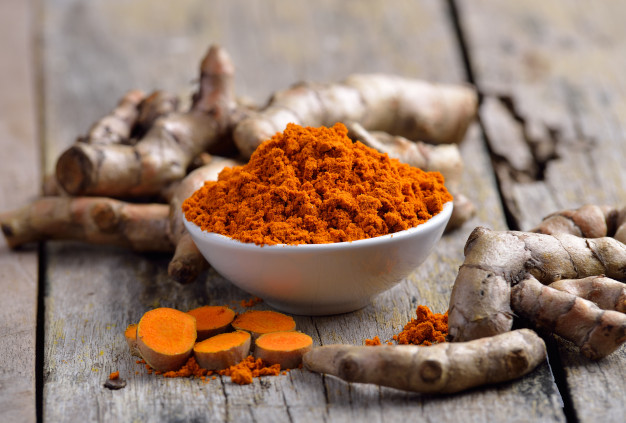
Turmeric (Curcuma longa) belongs to the ginger family, and originates from India and Southeast Asia. In fact, over 90% of the world’s turmeric supply grows in India. It thrives in tropical climates, preferring moist, well-drained soil, and its snaking rhizomes (roots) are the part of the plant most often used. Turmeric grows easily, and will propagate from root cuttings or divisions. People in Asia have known and used turmeric since 600 BC, but only in the past decade has it enjoyed significant rising popularity in the US.
Health benefits of turmeric
First and foremost, turmeric reduces inflammation, thanks to curcumin (the compound that gives turmeric its intense yellow color). Curcumin’s actions resemble those of cortisone and phenylbutazone, the standard in drugs for treating inflammation. However, curcumin imposes none of the side effects that accompany steroid anti-inflammatories. Curcumin also treats pain and promotes wound healing. Similar to cayenne, curcumin depletes nerve endings of the pain receptor neurotransmitter. Turmeric, therefore, makes a good topical poultice for sprains and sore joints.
Turmeric is also an excellent natural antibiotic. It strengthens digestion and improves intentional flora, purifies and stimulates the blood, and helps in forming new tissue. Because of these wonderful healing properties, some people keep turmeric capsules in their first aid kit!
In Southeast Asia, where people eat curry (fully loaded with turmeric) daily, we see very few instances of dementia and Alzheimer’s disease. Research indicates that curcumin’s anti-inflammatory properties contribute to excellent brain health in these cultures. That said, isolated curcumin doesn’t work as effectively as consuming turmeric in its entirety. Plus, turmeric works even better when ingested alongside black pepper. Piperine, a compound in black pepper, helps turmeric remain more bioavailable during the metabolic process. This means your body can absorb more curcumin, boosting turmeric’s positive effects of turmeric.
Get your daily dose
For preventing inflammation, the recommended daily dose of turmeric powder for an average adult is up to 1 TB/day. People under 125 lbs should get by with only consuming ½ tsp. For acute inflammation, like a sore knee, the dose might be as high as 4 TB (1 ounce) per day. Turmeric is safe for everyone (similar to ginger), and it’s hard to take too much. However, there are always exceptions. People suffering from acute hepatitis and jaundice should not ingest too much turmeric, as well as pregnant women. As always, consult with your doctor or naturopath before taking on a serious increase in any herb in your diet.
Cooking with turmeric
Turmeric mixes easily into many foods and drinks. Stir turmeric into warm tea, or mix it with honey to make a paste for adding to oatmeal, smoothies, or other dishes. Turmeric fits naturally in chai tea blends, which can help mask its somewhat bitter flavor. When buying turmeric, look for a bright orange-yellow color. This ensures the powder is fresh! You can also find fresh roots alongside ginger in the supermarket. Grate or mince the roots, as you would with ginger root. Add whole turmeric to soups, stews, curries, and other savory dishes, where you can also add black pepper. But, if you are a messy cook, beware! Turmeric stains yellow, and can color anything from your countertop to your clothing!
Do you know Lake Missoula Tea Company offers several blends that highlight turmeric?
- Golden Milk
- Turmeric Twirl
- Beat the Snot out of You (Sinus Blend)
- Sweet Rhapsody
- Skin Glow
- Joint Peace Arthritis Blend Tea
Golden milk gala
Have you ever seen someone sipping on a delightful gold and creamy drink? Turns out, drinking turmeric is a great way to heal with this herb. In India, people decoct turmeric into cow’s milk, and add a little pinch of black pepper before drinking. More elaborately, others make a turmeric paste and cook it into milk. In the US, more and more supermarkets, tea shops, and coffee shops have “golden milk” on the menu.
Folks in-the-know love our small batch blend of turmeric and spices! To prepare your own Golden Milk drink, mix:
- two teaspoons of Lake Missoula Tea Company Golden Milk
- honey (or sweetener of your choice)
- about a cup of hot (or cold) water
- 1/4 cup milk or creamer of your choice
- Stir vigorously or whisk to make extra frothy
- optional: sprinkle cinnamon on top for a fun and warming effect; rose water or ashwagandha root make great additions, too.
- sip and smile!
Watch how we prepare Golden Milk at the tea shop.
We hope you’ve enjoyed getting to know our lovely friend turmeric. We think this herb deserves all the praise, popularity, and glowing remarks we can send its way!
Written by: Greta de la Montagne, Edited by: Boo Curry and Heather Kreilick
References
The Yoga of Herbs by David Frawley and Dr. Vasant Lad; Herbal Formularies for Health Professionals, Vol 1, Digestion and Elimination by Dr. Jill Stansbury, ND; The Way of Ayurvedic Herbs by KP Khalsa and Michael Tierra; Principles and Practice of Phytotherapy by Simon Mills and Kerry Bone; The Essential Guide to Western Botanical Medicine by Christa Sinadinos; The Ayurveda Encyclopedia by Swami Sada Shiva Turtha; Indian Materia Medica, Vol 1, by Dr. K.M.Nadkarni; A Manual of Materia Medica and Pharmacology by David M.R.Culbreth, MD 1927; The Eclectic Materia Medica, Pharmacology and Therapeutics by Harvey Wickes Felter, MD; Medical Herbalism; The Science and Practice of Herbal Medicine by David Hoffman, FNIMH
Category: How to Make Tea Health Benefits Greta's Herbalist Corner

Very informative. I learned a lot about Turmeric from another blog on iahas.com and that was also very well researched.
Hi JesseA, Thank you for your comments. Glad you found it interesting, LMTC