
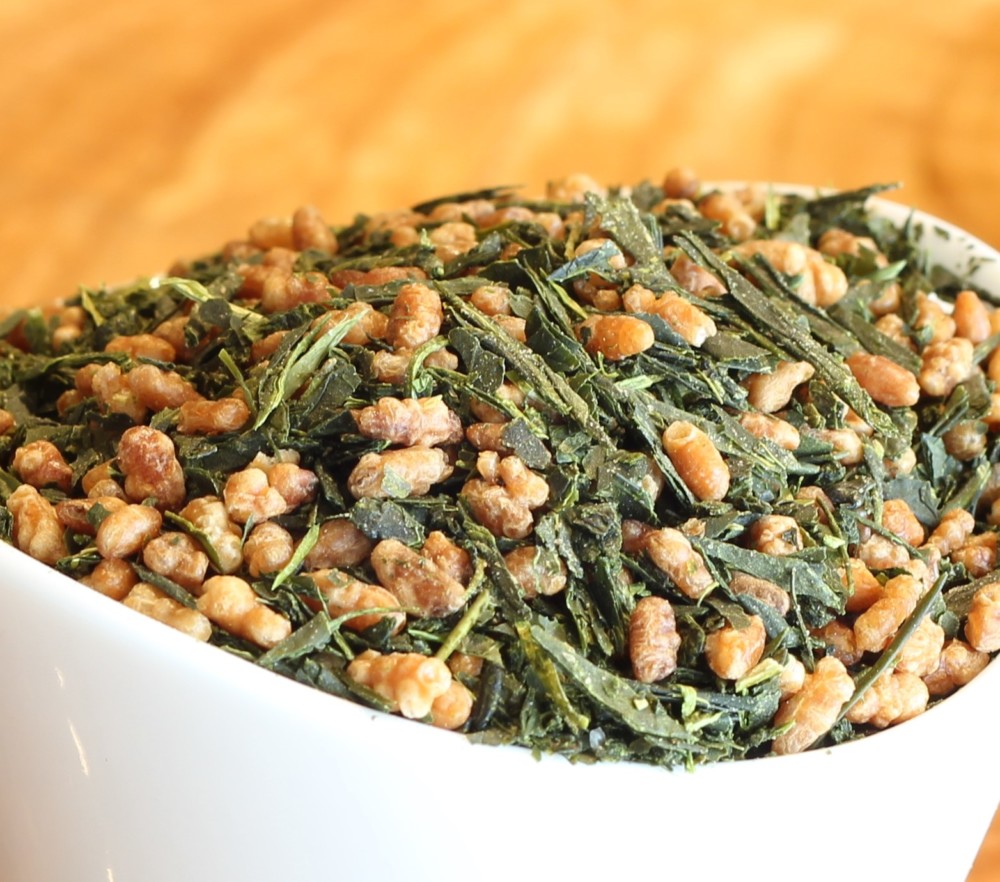

Genmai Chai is a Japanese tea that you might have experienced at a sushi or other Asian restaurant. Genmai Cha is also called Roasted Rice Tea or ‘Popcorn Tea’. Originally rice was used as a filler for Japanese who couldn’t afford the higher price of normal tea leaves. That rice tea was known as “the People’s Tea”. It became popular for religious fasting reasons and to the public, who found themselves in between meals for long periods.
There is a legend (some purport a Western fable) about Genmai Cha in which a slave of a Samurai named Genamai accidentally dropped rice in the tea he was preparing for his master. In a fit of rage, the Samurai swung his sword and cut off the slave’s head. After the deadly deed, the master drank the tea. He was impressed with the flavor and named the tea Genmai Cha in honor of the slave he killed (cha is ‘tea’ in Japanese).
Genmai Cha health benefits include increased mental concentration and is an immunity and metabolism booster. It can lower cholesterol and protect you from heart disease. Known for its weight loss abilities, it also provides antioxidants/catechins. These protect the body’s cells from free radical damage, which can reduce the spread of cancer. This tea may also improve bone and joint health from arthritis and rheumatism.
A traditional (some readers state this is a modern style) way of selling Genmai Cha is also with matcha and sold as Matcha-iri Genmai Cha! While we don’t carry this specific blend, you can mix a small amount of matcha with a serving of Genmai Cha to give it a try.

Category: Uncategorized
Actually this “legend” is completely a story made up in the West and doesn’t exist in Japan in any form.
Genmaicha originated in the early 20th century as the commercialization of a common practice of mixing roasted kagami mochi (hard rice cakes eaten at New Year’s) with old tea leaves to give it more flavor. Adding matcha is also not traditional but a more recent (last few decades) variation.
Hi Ian, thank you for sharing your knowledge about Genmai Cha. Perhaps calling it a Western fable would be more appropriate? LMTC