


Black currants had a rough start in the U.S. Black currants, native to Europe and Asia, were once popular in the U.S. However, farming the shrub was banned in the early 1900’s due to white pine blister rust. White pine blister rust is a fungus that jumps from white pine to black currant plants and back to white pine. Blister rust can eventually kill the tree. The infamous plants were banned in the United States in hopes of eliminating the fungus. However, black currants are not the only plants that host blister rust. Banning black currant plants hasn’t eliminated blister rust. Gooseberry and other plants in the Ribes genus are also hosts.
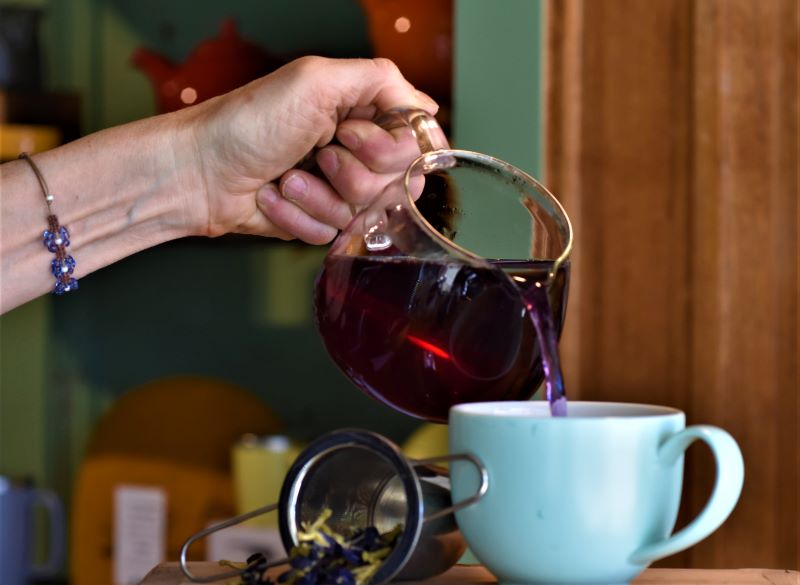
The federal ban was lifted from some states in the 1960s. The fruit remains largely unknown in the U.S. and has yet to become popular, like it is in many other parts of the world. Unlike its lack of popularity in the U.S., we blend with black currants in many of our blends. It brings a low, tart note to some of our teas, and can even add a slight blue hue to the brewed cup. Be aware that black currants are sometimes confused with Zante berries, which are smaller and sweeter, and not as pronounced in flavor as the black currant.
This fruit is high in vitamin C and E and antioxidants. The flavor is tart yet sweet, just like our Rift Valley Currant, our signature black currant tea blend. Unlike many black currant teas, which are fruity and sweet, our Rift Valley Currant blend is tart, slightly sweet and musty. That might sound funny, but this blend is so delicous! There’s no denying black currats are mouthwatering good!

Category: Uncategorized
Great information. I am the biggest fan of Black tea. Thanks much for sharing.